Introducing The Minor Monster. Throughout the history of the Western literary canon, queerness and queer literature have been consistently rendered non-functional participants in what philosopher Judith Butler calls the “heterosexual matrix” (12). Queerness has been ossified as monstrous and defined only by its Otherness to the said matrix. Consequently, for queer subjects to circumnavigate these … Continue reading Toward a Minor Monster: becoming-monstrous in Mary Shelley’s Frankenstein and Jennette Winterson’s Frankisstein.
“How can narrative embody life in words?” Tracing Derrida, Love, Beauty, and Afropessimism in Toni Morrison’s Jazz.
In black feminist scholar Saidiya Hartman’s seminal 2008 essay, “Venus in Two Acts”, she raises the pertinent question, “[h]ow can narrative embody life in words” (3). She follows on to question, “[h]ow does one listen to the groans and cries, the undecipherable songs, the cackle of fire in the cane field […] and then assign … Continue reading “How can narrative embody life in words?” Tracing Derrida, Love, Beauty, and Afropessimism in Toni Morrison’s Jazz.
Excitable differends: Finding New Temporal Idioms from the Genres of Discourse in Torrey Peter’s Detransition, Baby.
This paper begins by discussing the limitations of two contrasting schools of thought in queer theory: the antisocial and antiutopian turn of Lee Edelman and the more optimistic theories of Jose Esteban Muñoz. By this, both theorists explore how the queer body can and cannot be orientated towards non and heteronormative temporalities. However, this paper aims to uncover the lack of how the queer body can be phrased towards brighter futures and tomorrows. I propose the formation of a new hermeneutic, termed excitable-differends, through the collation of Jean-François Lyotard’s 1983 The Differend and Judith Butler’s 1997 Excitable Speech. I focus on the genres of discourse in Torrey Peters’ 2018 novel Detransition, Baby and how Peters’ fiction alerts us to excitable-differends present in fiction and the real world. Through this, Peters’ novel demonstrates how the formation of new temporal idioms disrupts heteronormative conceptions of temporalities and “bear[s] witness to the [excitable-] differend” (Lyotard xiii). This paper demonstrates how a return to Lyotard and Butler can fill the aforementioned lack in how the queer body is phrased towards brighter futures.
III: Mind // The // Gap
A maximalist stream of consciousness narrative that attempts to embrace a form of narratorial dissonant chorality. This story takes place on one hot day in July in the London Underground.
II. Commuter with the Leaf
The second story in my short story collection "Flatline" about commuters. This story is written in a minimalist stream of consciousness that attempts to blend the mundaneness of everyday travel with small trivial enjoyments.
Ein Stein
A poem I wrote on the train
“Can a Salmon Swim Without its Skin”: Poetic Musings on AI.
Analysis of a poem I wrote about an AI-generated image of salmon filets swimming in a babbling river.
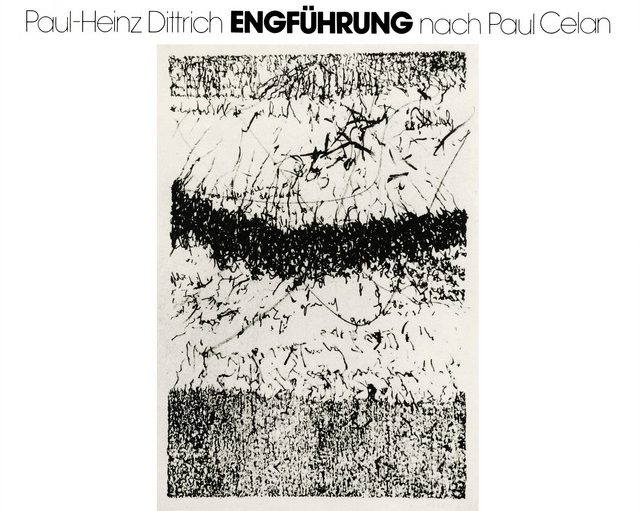
Engführung – Paul Celan
Attempted translation of Paul Celan's poem "Engführung" into English. I attempted to translate the affect of what Celan described that German poetry could no longer speak the language that "many ears expected to hear".
Todesfuge – Paul Celan
My translation of Paul Celan's poem "Todesfuge". I intended to translate it as literally as possible. With little to no embellishments, grammatical transpositions, to emulate how the German reader reads the poem.
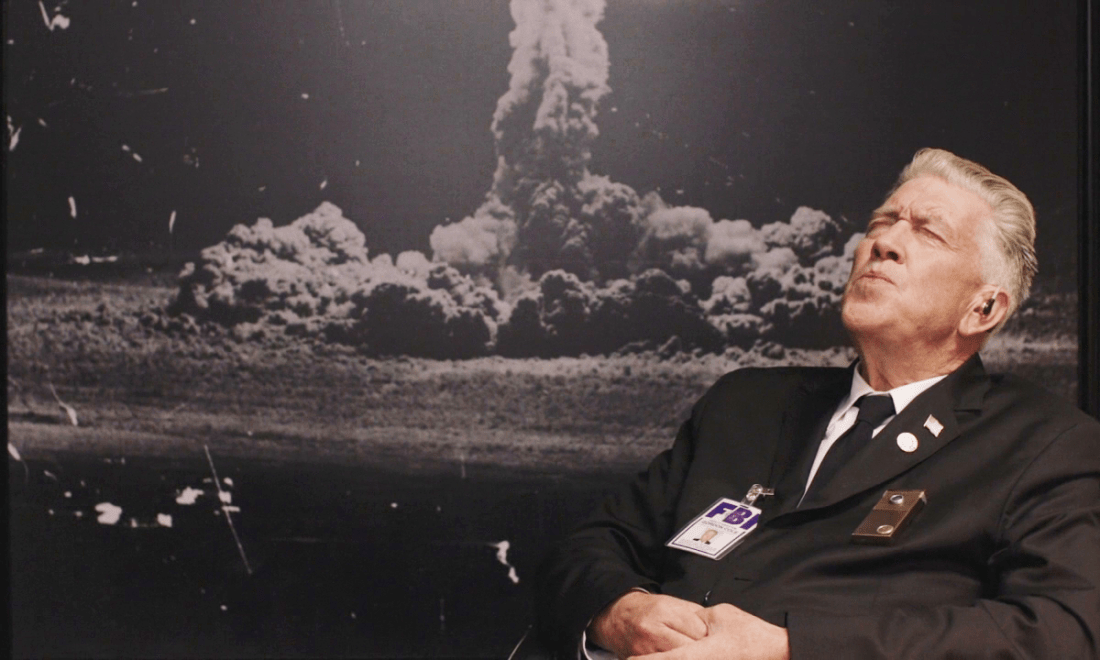
Toward a Quantum Surrealism: Diffracting the Intersections Between Interdimensional Beings, Multiple Temporalities, and Alternate Dimensions in Twin Peaks.
Essay analysing the intra-activity of surrealism and quantum theory in David Lynch and Mark Frost's Twin Peaks.